Field notes, not a lecture. These are the weather and sky words I reach for when a landscape needs an atmosphere, with what each one actually does and the way it tends to go wrong. Pick one or two per prompt. A sky with every phenomenon at once is not dramatic, it is a screensaver.
- Mist. Thin, low, pale. It sits in valleys and on water and softens everything beyond the middle distance. The safest word on the list, and the one that most reliably adds depth.
- Fog. Mist with ambition. It swallows the background, which is wonderful for calm, empty compositions and bad if you wanted a mountain range to read. Say how thick: "light fog" and "dense fog" are different pictures.
- Haze. Dry, warm, distant. It turns far ridges blue-grey and gives summer afternoons their slow feeling. Pairs well with backlight.
- Overcast. One even grey light box. Fine detail, no hard shadows, soft colour. A good choice for forests and for any scene where you want textures to read, and a poor one for drama unless you add a warm accent.
- Drizzle. Not rain: a faint wet sheen on every surface and a softened horizon. It makes streets and stone glossy. Ask for it when you want reflections without a storm.
- Thunderhead. One towering cumulus with a lit edge. It is a landmark, so give it room in the frame and a calm foreground to contrast with.
- Cirrus. Thin, high, feathery streaks. The sky word for "nothing much is happening, and it is lovely". Catches sunset colour long after the ground has gone dark.
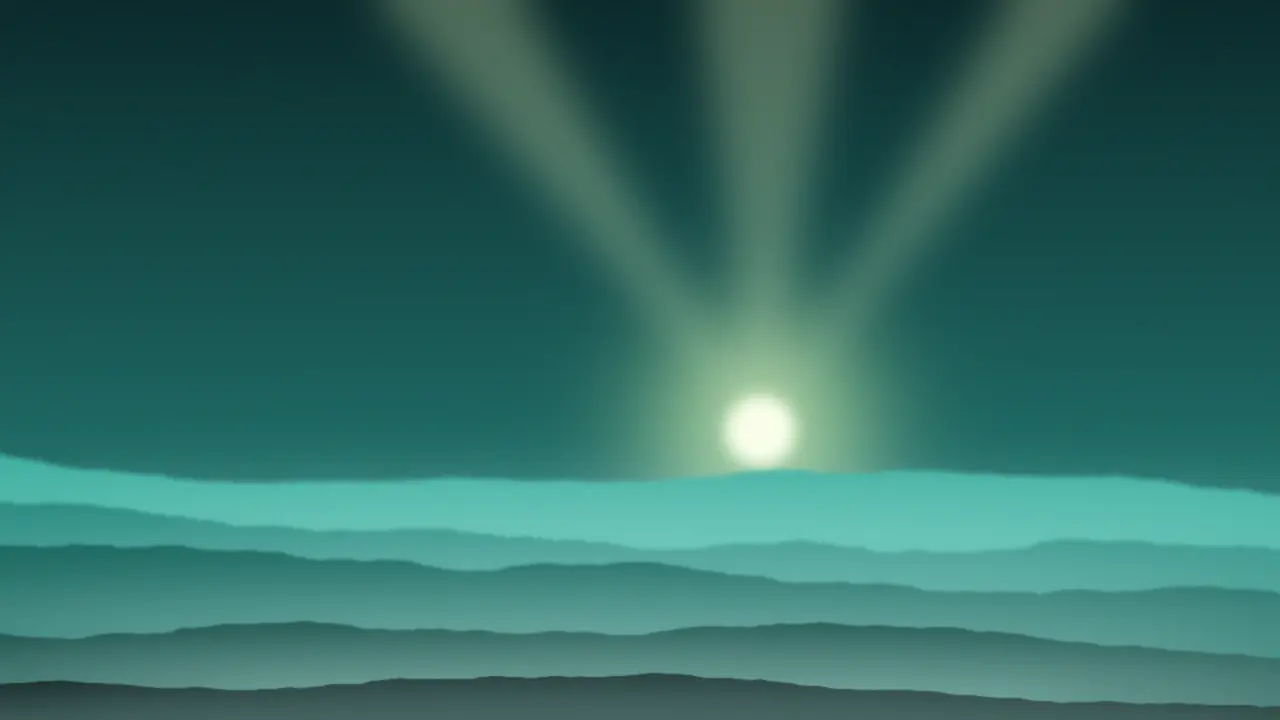
- Crepuscular rays. Shafts of light through gaps in cloud. Beautiful in moderation and a cliché in excess. Ask for "a few faint shafts" or you may get a stage show.
- Frost. Fine white edging on grass, leaves and rooftops, usually with cold light behind it. Excellent for early-morning scenes and for giving a small subject a very precise texture.
- Dust. Hanging particles that catch low sun. The desert and the harvest field both want it. A little goes a long way.
- Aurora. A moving curtain of green and teal across a dark sky. Models love it and will add it to anything you leave open, so mention it only when you mean it.
- Dew. A close-range word. It is not sky at all, but it belongs here because it tells the model the air is cool, damp and very early.
How to combine them
Two words that agree make a mood: mist and backlight, drizzle and a single warm lamp, frost and first light. Two that fight make a mess: dense fog and crepuscular rays can work, but fog and a crisp view of distant peaks cannot. When a result looks confused, remove one word before you rewrite anything else.
A narrow river valley at dawn, light mist lying on the water, cirrus clouds catching the first pink light, frost on the reeds in the foreground, pale blue-green hills fading into haze, still and silentA lighthouse on a rocky headland under a heavy overcast sky, drizzle softening the horizon, wet rocks reflecting a small warm lamp in the tower, the sea dark grey-green, wide cinematic frameFind out what a word does before you trust it
Every model reads these a little differently. Take one scene, keep the rest of the prompt fixed, swap only the weather word and render a small batch. Some models in the catalog accept a negative prompt and a seed: Krea V3 has both, so you can ask it to leave something out and hold the starting point constant. That turns the comparison from a guess into an experiment. Another good option is Nano Banana 2.1, which offers very wide frames, up to the 4K size tier.
Where weather words stop working
Weather is a texture, not a simulation. Models do not know where the wind is blowing, so a "storm approaching from the east" will not put anything in the east. Rain tends to be uniform: you rarely get one dark shower falling on one valley. And mixed skies are hard to control: if you ask for sun and heavy cloud together, you get a compromise. Ask for one condition well, and carry on from there.
If you want the light that goes with these skies, the four-dial guide to prompting light is the companion to this list, and the studio is where to try both.
Questions
Which single word adds the most atmosphere?
Mist. It is gentle, it rarely breaks a composition, and it creates depth by itself.
Can I get snow or rain that falls in one place only?
Rarely. Models spread weather evenly across the picture. If you need a local effect, paint or edit the area afterwards with an image-edit model.
Why does my sky keep getting an aurora I did not ask for?
Dark, open skies invite it. Name the sky you want (clear, starry, thin cloud) and the model has less room to improvise.